
Wondering when it's safe to give your little one juice? Here's what you need to know about timing, types, and serving sizes.
According to the American Academy of Pediatrics, babies under 12 months shouldn't have juice at all. This might be surprising, especially if juice was a staple for kids when you were growing up. But research shows that juice offers little nutritional benefit for infants and can even interfere with their nutrition and development.
During your baby's first year, breast milk or formula provides all the hydration and nutrients they need. Once they start eating solid foods around 6 months, you can add a little water if needed, but juice still needs to wait until after their first birthday
If you decide to offer juice after your baby turns one, choose wisely. Not all juices are created equal, and some are much better choices than others.
Best Juice Picks for Toddlers:
Juices to Avoid:
Remember, whole fruits are always a better choice than juice. They provide fiber and help your toddler practice chewing and develop healthy eating habits.
Once your child turns one, you can test the waters with juice. Just take it slow and make it an occasional treat instead of an everyday staple.
Steps for introducing juice:
If you're interested in different feeding approaches, baby-led weaning is also worth checking out. It’s all about letting your baby guide the way with what they eat (as long as it’s safe and age-appropriate).
Even after your little one turns one, less is more when it comes to juice. The AAP lays out some clear limits for kids at every stage:
| Age Group | Recommended Juice Intake |
|---|---|
| 12-36 months | No more than 4 ounces (1/2 cup) per day |
| 4-6 years | 4-6 ounces per day |
| 7-18 years | Limit to 8 ounces per day |
These limits help ensure juice doesn’t replace healthier foods and drinks in your child’s diet. Remember, water is the best choice for hydration as your child grows, while breast milk or formula (and later, whole milk) should remain a young toddler’s primary drink.
Here are a few things to think about before introducing your child to juice:
Sugar content: Even 100% fruit juice contains natural sugars. A 4-ounce serving of apple juice has about 13 grams of sugar, roughly the same as some sodas. Sure, it’s natural sugar, but it can still affect teeth and weight if it adds up.
Tooth decay: Even natural sugars in juice can contribute to tooth decay, especially if babies drink juice from bottles or sippy cups throughout the day.
Digestive issues: Juice contains sorbitol and other sugars that can cause gas, bloating, and diarrhea, especially in young children.
Nutrient absorption: Too much juice can make picky eaters even pickier by filling them up and lowering their appetite for foods rich in important nutrients.
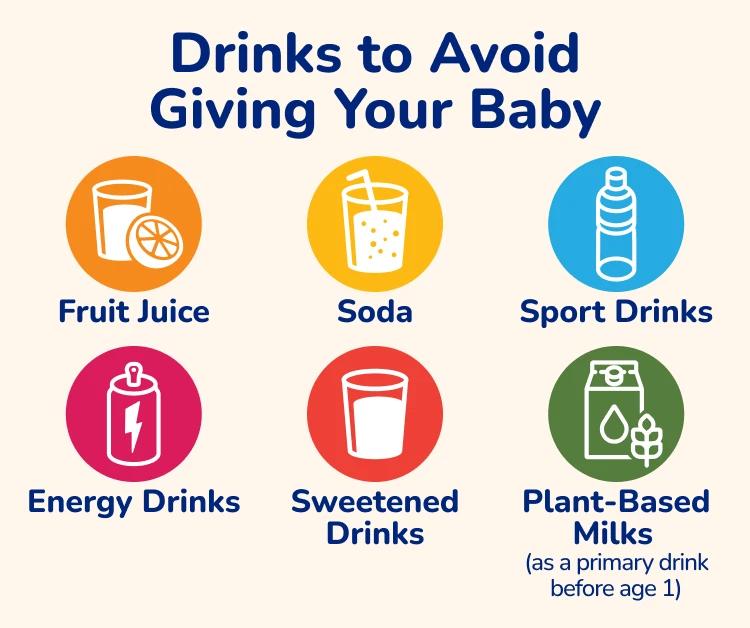
Other drinks to avoid: Along with limiting juice, avoid giving babies and young toddlers:
Working out the best nutrition plan for your baby can definitely feel a little overwhelming at times. That’s why Enfamil is here every step of the way, from picking the right formula to starting solids, all the way through those first sips of juice.
And if you want peace of mind about your baby’s nutrition, Enfamil formulas offer complete care to support growing bodies and curious minds. Our formulas are packed with nutrients that help your little one’s brain, immune system, and all-around health.
Still have feeding questions? Join Enfamil Family Beginnings® for answers, personalized support, and exclusive offers to help you feel ready for every feeding challenge ahead.

As with most things, practice makes perfect—and rest assured, you’ll get plenty of diaper-changing practice those first couple of years. In no time you’ll be a pro and be able to tackle your baby’s diaper with confidence. For more tips and resources on all things baby, including nutrition and feeding, be sure to join Enfamil Family Beginnings®. Enjoy up to $400 in savings, plus exclusive rewards, support, and surprises.
All information on Enfamil, including but not limited to information about health, medical conditions, and nutrition, is intended for your general knowledge and is not a substitute for a healthcare professional's medical identification, advice, or management for specific medical conditions. You should seek medical care and consult your doctor or pediatrician for any specific health or nutrition issues. Never disregard professional medical advice or delay seeking medical treatment, care, or help because of information you have read on Enfamil.
.png&w=3840&q=75)