
When prepared correctly and introduced at the right time, eggs can be a nutritious addition to your baby's diet.
Last Updated On: June 16, 2026
Eggs are nutritious and versatile, but when can you safely introduce them to your baby? Good news: Eggs can be one of the first foods your little one tries, and they're packed with nutrients that support healthy growth and development.
In this guide, we'll cover when babies can start eating eggs, how to introduce them safely, and what to watch for along the way.
Babies can start eating eggs around 6 months of age, as long as they show signs that they’re ready for solid foods. According to the American Academy of Pediatrics, there's no need to delay introducing eggs.1
Recent research suggests that introducing eggs earlier rather than later may help reduce the likelihood of developing an egg allergy. The key is making sure your baby is developmentally ready for solids, which typically happens around the half-year mark.
Before you serve up that first bite, check that your baby can:
If your little one checks these boxes, they're ready to explore new foods, including eggs.
Eggs are a nutritional powerhouse for growing babies. Here's what makes them so valuable:
Introducing eggs to your baby is simple. Just keep the following in mind:
Always cook eggs thoroughly before serving them to your baby. This reduces the risk of foodborne illness from bacteria like salmonella. Make sure there's no runny yolk or liquid egg white.
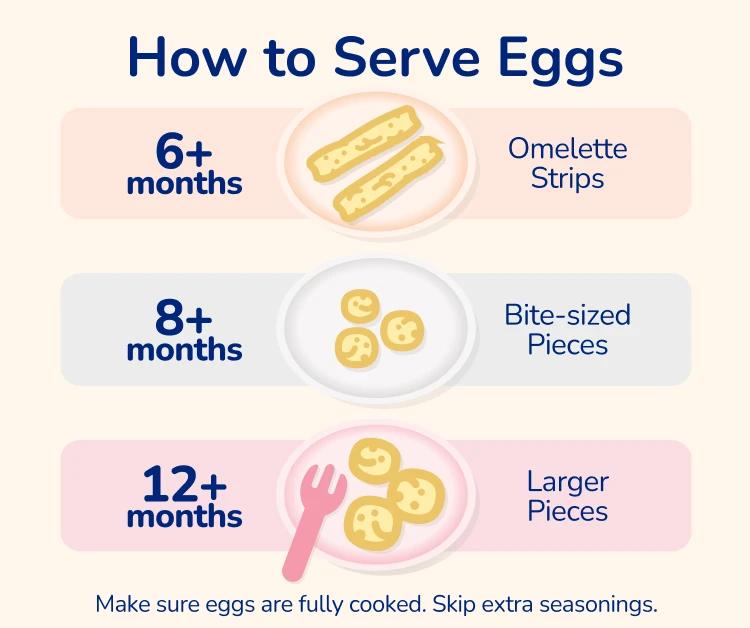
How you prepare eggs depends on your baby's age and feeding style. For children ages 6 to 8 months, serve scrambled eggs in small pieces, or a diced boiled egg combined with water and mashed.
As your child grows and their diet expands, introduce them to foods baked or cooked with eggs, such as small bites of French toast or pancakes. Toddlers can handle more textures, so feel free to get creative with egg muffins, egg salad, or frittatas. If you're following baby-led weaning, a halved hard-boiled egg works well, too.
When you introduce a new food↗, it's helpful to serve it alone (or with foods your baby has already tried). This way, if your baby has a reaction, you'll know eggs were the cause. Wait a few days before introducing another new food.
Eggs are one of the most common food allergens in babies, so keep an eye out for any unusual reactions after your child eats eggs for the first few times. (See below for more).
Any type of chicken egg is safe and nutritious for babies, as long as it's fully cooked! While organic or pasture-raised eggs may contain slightly higher levels of certain nutrients like omega-3 fatty acids, conventional eggs are still an excellent choice. Choose what fits your family's budget and values.
And when preparing eggs for your baby, skip the salt, butter, and other seasonings. Babies don't need extra sodium, and it's best to let them experience the natural taste of food. A small amount of breast milk or formula can help soften scrambled eggs if needed.
While eggs are safe for most babies, they’re also a common allergen. Here's what to know:
Egg allergies are one of the most common food allergies in infants, but the good news is that many children outgrow them by school age. Introducing eggs early (around 6 months) may actually help reduce the likelihood of developing an allergy, according to recent guidelines.
Watch for these indicators after your baby eats eggs:
If you notice any of these indicators, stop feeding your baby eggs and contact your pediatrician. In rare cases, a severe allergic reaction called anaphylaxis can occur, which requires immediate medical attention.
If your family has a history of food allergies or eczema, talk to your pediatrician before introducing eggs. They may recommend introducing eggs under medical supervision or testing for allergies first.
Introducing eggs is just one of many exciting milestones in your baby's feeding journey. Whether you're starting solids, navigating allergies, or figuring out what foods to try next, Enfamil is here to support you every step of the way.
As your child grows and their nutritional needs evolve, our products and resources are designed to provide the nutrients they need to thrive. From infant formula to vitamin supplements, we're committed to helping you feel confident in every feeding decision.
Ready to support your little one's nutrition journey? Join Enfamil Family Beginnings® for expert tips, exclusive offers, and trusted guidance tailored to your baby's stage.
1. https://www.healthychildren.org/English/healthy-living/nutrition/Pages/when-to-introduce-egg-peanut-butter-and-other-common-food-allergens-to-your-baby-food-allergy-prevention-tips.aspx↗
2. https://www.cdc.gov/infant-toddler-nutrition/foods-and-drinks/when-what-and-how-to-introduce-solid-foods.html↗
3. https://pmc.ncbi.nlm.nih.gov/articles/PMC6024369/↗
4. https://pmc.ncbi.nlm.nih.gov/articles/PMC6865885/↗
5. https://gikids.org/digestive-topics/introducing-allergens-to-infants/↗
6. https://www.today.com/parents/5-surprising-foods-you-should-be-feeding-your-baby-2-t86486↗
7. https://www.cacfp.org/assets/pdf/Feeding+Infants+in+the+CACFP+cacfp.org/↗
As with most things, practice makes perfect—and rest assured, you’ll get plenty of diaper-changing practice those first couple of years. In no time you’ll be a pro and be able to tackle your baby’s diaper with confidence. For more tips and resources on all things baby, including nutrition and feeding, be sure to join Enfamil Family Beginnings®. Enjoy up to $400 in savings, plus exclusive rewards, support, and surprises.
All information on Enfamil, including but not limited to information about health, medical conditions, and nutrition, is intended for your general knowledge and is not a substitute for a healthcare professional's medical identification, advice, or management for specific medical conditions. You should seek medical care and consult your doctor or pediatrician for any specific health or nutrition issues. Never disregard professional medical advice or delay seeking medical treatment, care, or help because of information you have read on Enfamil.
.png&w=3840&q=75)