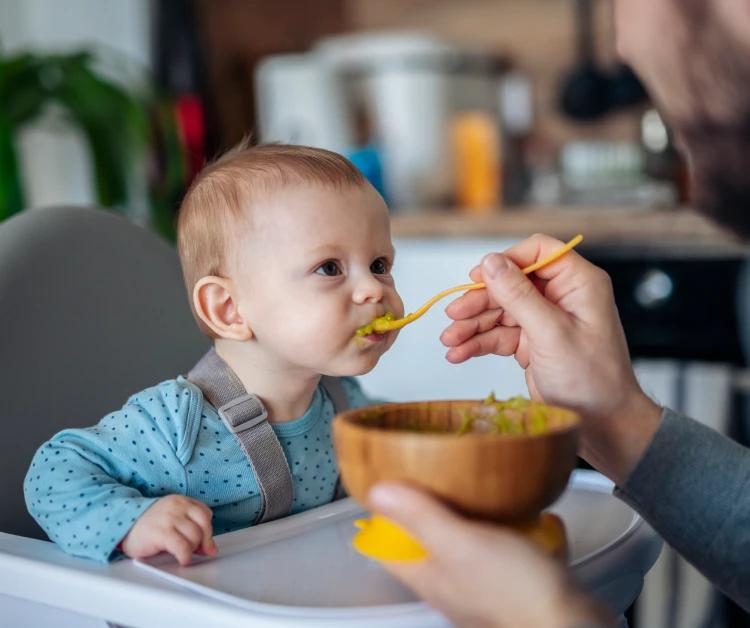
Hearing your baby grunt while they eat is a common and often amusing part of their feeding journey. It’s just their way of getting used to the new and exciting world of solid foods.
If you've noticed your baby grunting while eating solids, you're not alone. Many parents notice new sounds and behaviors when little ones start exploring solid foods. While these changes can feel concerning, especially during late-night feedings, most are simply part of your baby's adjustment to this milestone.
Starting solids is a big step in your baby's development. Their digestive system is learning to process new textures and foods, and their bodies are working in new ways. Let’s walk through what might be happening, and when to reach out to your pediatrician.
A baby grunting while eating is quite common and usually nothing to worry about. When babies start eating solids, their bodies are learning to manage something entirely new. Grunting often reflects the effort their digestive system is making to process new textures and consistencies.
Your baby might grunt more with certain foods, particularly those that are thicker or have more texture. This is completely natural as they adjust to the transition from liquid-only nutrition to incorporating solids.
As your baby’s digestive system adapts, you might notice several changes. Most are temporary and resolve over time.
Occasional spit-up is normal as babies learn to eat, especially if they've eaten too quickly or swallowed air. If your baby is experiencing frequent or forceful vomiting, reach out to your pediatrician.
Constipation is common with the shift from an all-liquid diet to solids. Try offering small amounts of water, adding fiber-rich foods, giving gentle tummy massages, and helping your baby move their legs in a bicycle motion.
Loose stools can occur as your baby adjusts to new foods. Usually, this is temporary. If diarrhea persists or is accompanied by worrying symptoms such as fever or lethargy, contact your pediatrician.
Gas is very common when starting solids, and certain foods naturally produce more gas. To help ease your baby's gas, burp them during and after meals and try a gentle tummy massage.
You’ll likely see changes in color, texture, and frequency of stools after starting solids. These are normal, but if there are hard, pellet-like stools or signs of discomfort, this could indicate constipation.
Straining often relates to your baby learning to use new muscles for eating solids, which requires different skills than drinking from a bottle or nursing. However, if it’s accompanied by crying, refusal to eat, or hard stools, it could indicate constipation or another concern.
As solids are introduced, know what’s typical and what might require medical attention.
Common, usually temporary:
When to contact your pediatrician:
Start with single-ingredient foods and wait 3–5 days before introducing new foods to help you identify sensitivities, and be sure to keep in mind the foods you shouldn't feed your baby.
Eating solids is a new experience with different textures, flavors, and sensations. Some babies adjust quickly, while others need more time.
Your baby might be upset because of new textures, digestive discomfort, or overstimulation. To ease discomfort, start with very small amounts, offer solids when your baby is alert but not overly hungry, and let your baby set the pace.
Remember, learning to eat solids is a process that takes time. Stay relaxed and positive, even if meals don’t go as planned.
Starting solids is an exciting milestone. Most babies adapt beautifully, and those early grunts and reactions typically resolve as their systems mature.
Ready for expert support throughout your feeding journey? Join Enfamil Family Beginnings® for guidance, exclusive offers, and helpful resources through every stage.
FAQs

As with most things, practice makes perfect—and rest assured, you’ll get plenty of diaper-changing practice those first couple of years. In no time you’ll be a pro and be able to tackle your baby’s diaper with confidence. For more tips and resources on all things baby, including nutrition and feeding, be sure to join Enfamil Family Beginnings®. Enjoy up to $400 in savings, plus exclusive rewards, support, and surprises.
Join NowAll information on Enfamil, including but not limited to information about health, medical conditions, and nutrition, is intended for your general knowledge and is not a substitute for a healthcare professional's medical identification, advice, or management for specific medical conditions. You should seek medical care and consult your doctor or pediatrician for any specific health or nutrition issues. Never disregard professional medical advice or delay seeking medical treatment, care, or help because of information you have read on Enfamil.
.png&w=3840&q=75)