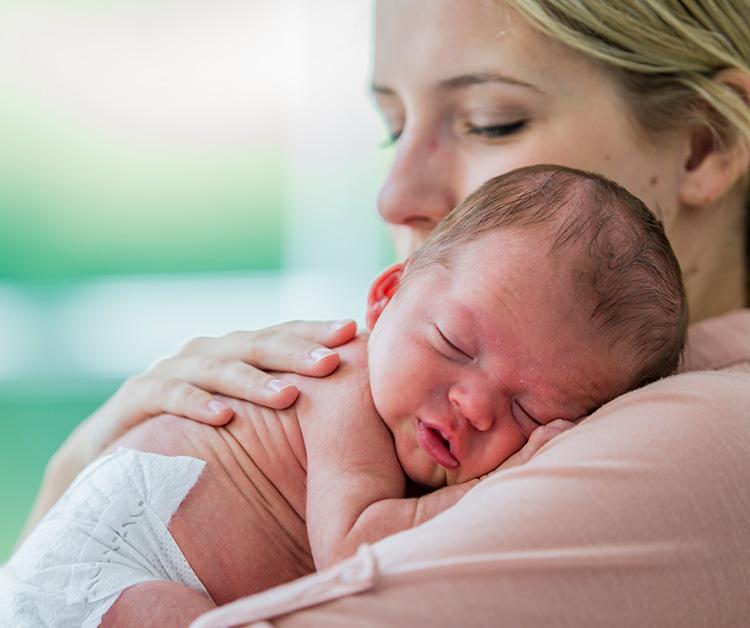
Curious about how your baby's memory starts forming? Check out these simple, parent-approved ways to help boost your little one’s memory from the start!

Medically reviewed by a board-certified pediatrician
Last Updated On: June 9, 2026
Every moment with your little one feels pretty special. As you watch them grow, you’re likely wondering what's going on inside that beautiful little head. Turns out, your baby's memory is getting better and better from day one. By the time you meet your newborn, their brain is already hard at work capturing information, and that ability to learn and remember only continues to grow. Here’s a little insight into how baby memory works and how you can help as they hit new milestones.
Simply put, baby memory is just the brain’s way of storing and remembering information. It’s a key part of their mental growth, helping them learn from experiences, recognize loved ones, and understand the world around them.
In the first year, memory usually falls into three categories:
Your baby's memory starts developing right from the start (and even before they’re born). While they won't remember their first birthday smash cake, they are picking up on lots of information that helps them bond and figure out what’s what.
At first, memory is tied closely to what babies can see, feel, and hear. For instance, the sound of their mother's voice can bring them comfort because they heard it in the womb.1
Here's a general timeline of how memory grows:
Yes, they do! It’s not quite the same as how adults remember stuff (like what you ate for breakfast), but newborns have “recognition memory.” From birth, they know their mom’s voice and smell, which provides them with comfort and security.
Recognition is a huge milestone in a baby's memory.
A baby's memory span—the length of time they can retain a specific memory—grows quickly, just like their attention span.
| Age Range | Memory Development |
|---|---|
| Newborns to 2 Months | These memories are short, often lasting only a couple of minutes to 24 hours for simple things. |
| 2 to 6 Months | Memory retention increases rapidly across the first weeks of life.5 |
| 6 to 12 Months | By this age, studies suggest babies can remember actions or events for several weeks, especially if you repeat them with developmental activities. |
You don't need fancy equipment to help your baby's brain grow. Love, attention, and good nutrition are your best tools. Here are three simple steps to support memory:
Watching your baby learn and remember is one of the great joys of parenting. Remember, building memory takes time and patience, so don’t stress if things don’t click right away.
Enfamil is here to help fuel the journey. Our formulas have expert-recommended DHA, as well as MFGM, to help support brain development.
Want more tips on fueling your baby's potential? Join Enfamil Family Beginnings® today for up to $400 in savings, exclusive rewards, and support tailored to your baby's milestones.
1. https://www.healthychildren.org/English/tips-tools/ask-the-pediatrician/Pages/I%E2%80%99m-pregnant-and-would-like-to-sing-to-my-unborn-baby.aspx↗
2. https://www.healthychildren.org/English/ages-stages/baby/Pages/Developmental-Milestones-3-Months.aspx↗
3. https://www.babylab.ucla.edu/wp-content/uploads/sites/8/2016/09/Bremner_etal2015CDP.pdf↗
4. https://www.parents.com/when-babies-recognize-parents-5218236↗
5. Davinson K, Learmonth AE, Cuevas K. Infant long-term memory: The last quarter century and the next. Infant Behav Dev. 2025 Dec;81:102136. doi: 10.1016/j.infbeh.2025.102136. Epub 2025 Sep 16. PMID: 40961881; PMCID: PMC12717880. https://pmc.ncbi.nlm.nih.gov/articles/PMC12717880/↗
As with most things, practice makes perfect—and rest assured, you’ll get plenty of diaper-changing practice those first couple of years. In no time you’ll be a pro and be able to tackle your baby’s diaper with confidence. For more tips and resources on all things baby, including nutrition and feeding, be sure to join Enfamil Family Beginnings®. Enjoy up to $400 in savings, plus exclusive rewards, support, and surprises.
All information on Enfamil, including but not limited to information about health, medical conditions, and nutrition, is intended for your general knowledge and is not a substitute for a healthcare professional's medical identification, advice, or management for specific medical conditions. You should seek medical care and consult your doctor or pediatrician for any specific health or nutrition issues. Never disregard professional medical advice or delay seeking medical treatment, care, or help because of information you have read on Enfamil.
.png&w=3840&q=75)