
Your baby’s doctor and trial and error can help you make the best baby formula decision for a cow’s milk protein allergy (CMPA).
If your child has been identified as having a cow’s milk protein allergy (CMPA), you're probably trying to figure out the next best step. Your pediatrician might've already nudged you toward a hypoallergenic formula built to reduce issues while keeping growth on track.
But with so many different types of formulas available, it’s natural to feel a little overwhelmed. Your doctor will guide you toward the best formula for a milk protein allergy for your baby, which may be a hypoallergenic formula (also known as an extensively hydrolyzed protein formula) or an amino acid-based formula.
For babies with a cow’s milk protein allergy, pediatricians usually recommend a hypoallergenic baby formula. Unlike the proteins in regular formula, the proteins in a cow’s milk protein allergy formula are purposefully designed with smaller protein fragments. This means it's less likely to set off allergies.
Key options for cow’s milk protein allergy include:
Hypoallergenic formulas are specifically designed to manage CMPA while hitting every nutrition box for growth.
Key reasons they help:
Every baby’s different, so finding the best infant formula for a cow milk allergy is a team effort with your pediatrician.
Key steps:
Not sure where to get started? Enfamil offers clinically studied hypoallergenic formulas like Nutramigen® with LGG® (extensively hydrolyzed with probiotic support) and PurAmino® (amino acid-based) to meet different CMPA needs. Both provide complete nutrition while being gentle on babies with cow’s milk protein allergy.
Some babies can still have unpleasant digestive issues even if they don’t have a cow’s milk protein allergy. Your pediatrician can help determine if your baby has a sensitivity to or is allergic to cow's milk protein. If they’re sensitive, a formula for dairy sensitivity can help them feel better.
Choosing a cow's milk protein allergy formula can feel like a lot, but you don't have to figure it out solo. With your pediatrician and the right formula in your corner, you can take it one step at a time. And for even more support in finding the best formula for a cow’s milk protein allergy, join Enfamil Family Beginnings®. We offer CMPA resources and savings on hypoallergenic formulas designed for your baby’s needs.
1https://nutritioncare.org/wp-content/uploads/2024/12/Hypoallergenic-Formula-Practice-Tool.pdf↗
2https://www.jacionline.org/article/s0091-6749(16)32487-3/fulltext↗
3https://onlinelibrary.wiley.com/doi/10.1111/apa.12615↗
4Bognanni et al. World Allergy Organization Journal (2024) 17:100888 http://doi.org/10.1016/j.waojou.2024.100888↗
5https://frimley-healthiertogether.nhs.uk/application/files/5616/7584/7451/NHS_Starting_a_hypoallergenic_formula_Advice_Feb_2023_Final.pdf↗
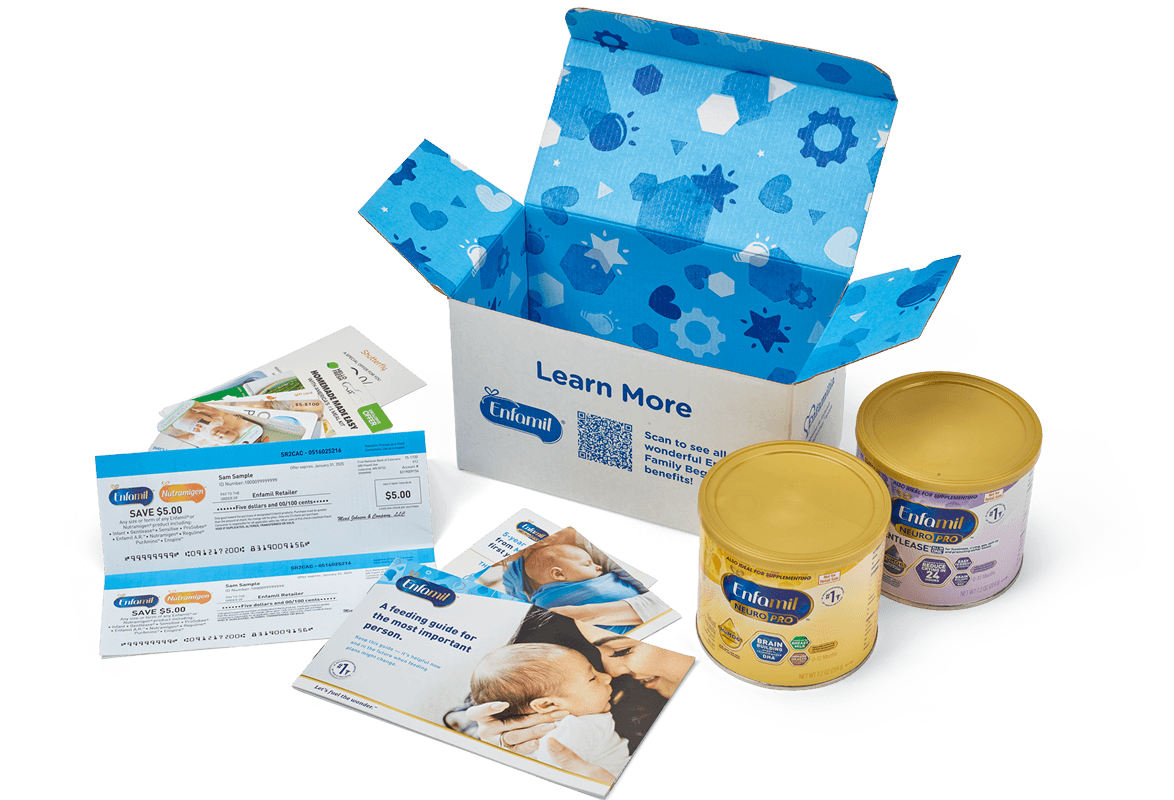
As with most things, practice makes perfect—and rest assured, you’ll get plenty of diaper-changing practice those first couple of years. In no time you’ll be a pro and be able to tackle your baby’s diaper with confidence. For more tips and resources on all things baby, including nutrition and feeding, be sure to join Enfamil Family Beginnings®. Enjoy up to $400 in savings, plus exclusive rewards, support, and surprises.
All information on Enfamil, including but not limited to information about health, medical conditions, and nutrition, is intended for your general knowledge and is not a substitute for a healthcare professional's medical identification, advice, or management for specific medical conditions. You should seek medical care and consult your doctor or pediatrician for any specific health or nutrition issues. Never disregard professional medical advice or delay seeking medical treatment, care, or help because of information you have read on Enfamil.
.png&w=3840&q=75)